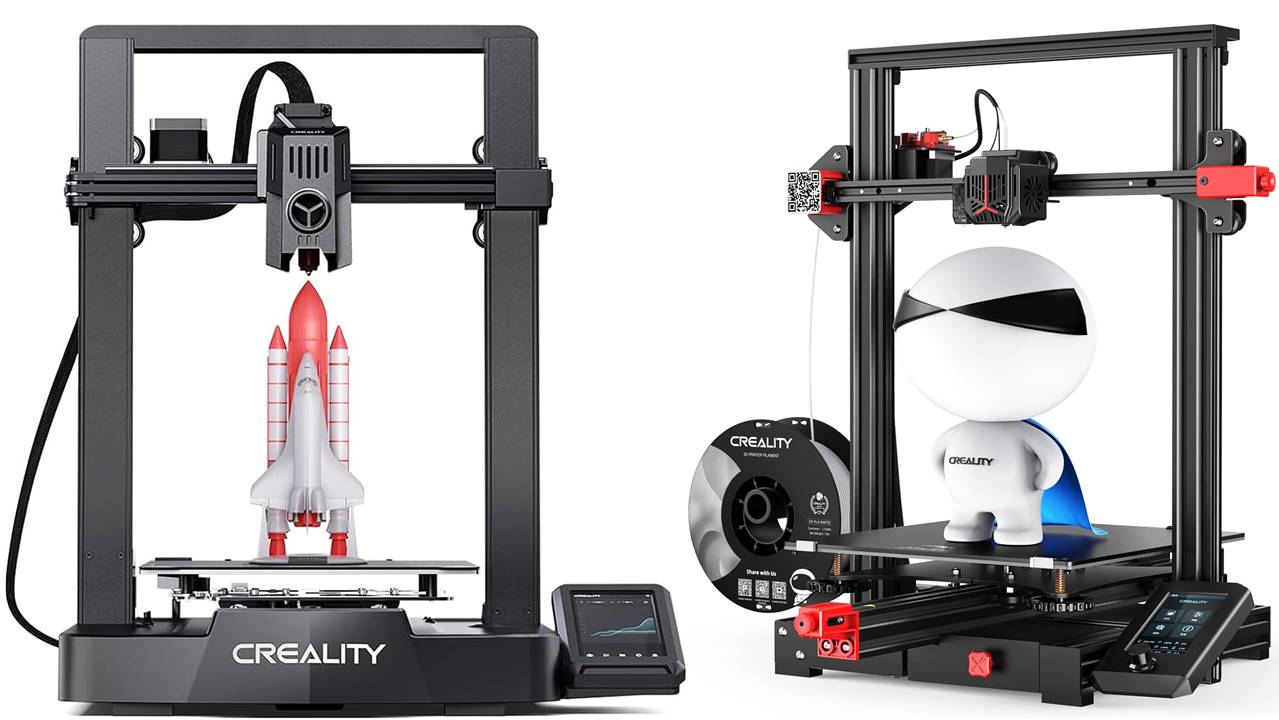
TOP1. Creality Ender 3 V3 SE 3D Printer
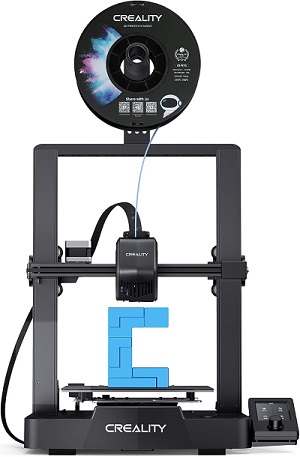
The Creality Ender 3 V3 SE is a high-performance FDM 3D printer designed for speed and precision. With a fast printing speed of up to 250mm/s, it allows users to complete projects efficiently without sacrificing quality. The printer is equipped with CR Touch auto-leveling technology, ensuring a smooth and accurate setup process for every print. Its Sprite Direct Extruder and auto-load filament system make filament management seamless, reducing manual intervention. The dual Z-axis and Y-axis provide enhanced stability, ensuring accurate prints even with complex designs. With a spacious build volume of 8.66 x 8.66 x 9.84 inches, this printer is ideal for larger projects. The Ender 3 V3 SE is perfect for both beginners and experienced makers looking for a reliable, fast, and user-friendly 3D printing experience.
Specifications:
- Print Speed: Up to 250mm/s
- Build Volume: 8.66 x 8.66 x 9.84 inches
- Leveling: CR Touch auto-leveling
- Extruder: Sprite Direct Extruder
- Filament Management: Auto-load filament
- Z-axis/Y-axis: Dual Z-axis and Y-axis for stability
- Temperature: Standard materials (PLA, ABS, etc.)
Pros:
- Fast printing speed for quick project completion.
- Auto-leveling simplifies setup for beginners.
- Stable design ensures accurate prints.
- Great for both small and medium projects.
- User-friendly, making it ideal for beginners.
Cons:
- Build volume may not be sufficient for larger projects.
- Limited to mid-range materials in terms of temperature handling.
TOP 2. Creality Ender 3 Max Neo 3D Printer
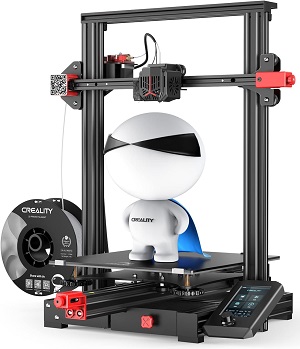
The Creality Ender 3 Max Neo is a feature-packed 3D printer offering a large build volume of 11.8 x 11.8 x 12.6 inches, making it ideal for printing bigger and more complex models. It comes with CR Touch auto-leveling technology, ensuring precise and hassle-free bed leveling for accurate prints. The dual Z-axis design provides enhanced stability, reducing wobbling and improving overall print quality. Equipped with a full-metal extruder, the Ender 3 Max Neo ensures better filament feeding and durability. The silent mainboard minimizes noise, making it a quiet addition to any workspace. Additionally, the filament sensor detects when the filament is low or broken, allowing for a seamless print process. This 3D printer is perfect for both hobbyists and professionals looking for a reliable, large-format 3D printing solution.
Specifications:
- Print Speed: Up to 180mm/s
- Build Volume: 11.8 x 11.8 x 12.6 inches
- Leveling: CR Touch auto-leveling
- Extruder: Full-metal extruder
- Z-axis: Dual Z-axis for stability
- Noise: Silent mainboard for quieter operation
- Filament Sensor: Yes
Pros:
- Large build volume for bigger models and complex prints.
- Silent mainboard reduces noise, suitable for home use.
- Filament sensor improves ease of use and reliability.
- Solid and durable construction.
- Great for hobbyists and professionals working on larger projects.
Cons:
- Slower printing speed compared to newer models.
- Takes up more space due to the larger size.
TOP 3. Official Creality Ender 3 3D Printer
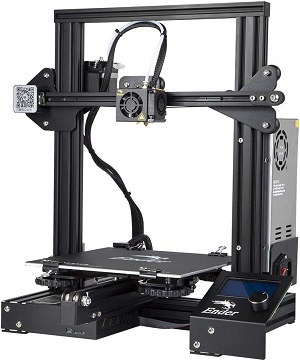
The Official Creality Ender 3 3D Printer is a popular and affordable option for both beginners and hobbyists in the world of 3D printing. Fully open-source, this printer allows for extensive customization and access to a wide range of upgrades, making it a highly versatile machine. It features a resume printing function, which is invaluable in case of power outages, allowing the printer to continue from where it left off. With a printing size of 8.66 x 8.66 x 9.84 inches, it offers ample space for a variety of projects. Its sturdy design, combined with ease of assembly, makes it a favorite among the DIY community. Reliable, customizable, and budget-friendly, the Creality Ender 3 is an excellent choice for anyone looking to dive into 3D printing.
Specifications:
- Print Speed: Up to 180mm/s
- Build Volume: 8.66 x 8.66 x 9.84 inches
- Leveling: Manual leveling
- Resume Printing: Yes
- Open Source: Fully open-source for customization
Pros:
- Affordable and great for beginners.
- Customizable with numerous upgrades available.
- Resume printing function is helpful in case of power interruptions.
- Easy to assemble, with a strong DIY community for support.
Cons:
- Manual leveling requires more effort and can be challenging for beginners.
- Standard extruder might need upgrading for advanced filament use.
TOP 4. Creality K1 Max 3D Printer
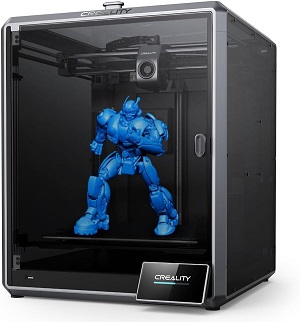
The Creality K1 Max 3D Printer is a cutting-edge machine designed for speed, precision, and convenience. It boasts an impressive 600mm/s printing speed and 20,000mm/s² acceleration, significantly reducing printing times without sacrificing quality. Featuring a Core XY structure, this printer ensures high stability and accuracy, especially for complex and fast prints. The large build volume of 11.81 x 11.81 x 11.81 inches makes it perfect for creating sizable models or multiple parts in one go.
Equipped with smart AI functions, the K1 Max offers features like real-time print monitoring and error detection, enhancing both the user experience and print reliability. The auto-leveling system ensures consistent print quality, while the dual-gear extruder provides strong, reliable filament feeding, especially for various filament types. Ideal for both professionals and enthusiasts, the Creality K1 Max combines speed, advanced features, and precision to deliver top-tier performance in 3D printing.
Specifications:
- Print Speed: Up to 600mm/s
- Build Volume: 11.81 x 11.81 x 11.81 inches
- Leveling: Auto-leveling
- Structure: Core XY for higher stability and precision
- AI Functions: Real-time monitoring, error detection
- Extruder: Dual-gear extruder
- Temperature: Handles high-temperature materials
Pros:
- Extremely fast printing speed with advanced stability.
- Large build volume perfect for bigger projects.
- AI-driven features enhance reliability and monitoring.
- Suitable for advanced materials and high-temperature printing.
- Great for professionals and enthusiasts seeking high-speed performance.
Cons:
- Higher price point compared to other Ender models.
- Advanced features may have a steeper learning curve for beginners.
TOP 5. Creality Ender 3 V3 KE 3D Printer
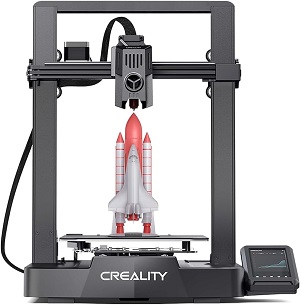
The Creality Ender 3 V3 KE 3D Printer is designed for high-speed, precise printing, offering a maximum printing speed of 500mm/s, making it one of the fastest models in the Ender series. It comes equipped with auto-leveling technology for hassle-free setup, ensuring consistently accurate prints. The dual cooling system efficiently dissipates heat, maintaining high print quality, even at speeds up to 300°C, which allows for printing with a wide range of advanced materials.
With dual Z-axis support, the printer is more stable, minimizing vibrations and improving overall print precision. The smart UI interface makes controlling the printer intuitive and easy. The build volume of 8.66 x 8.66 x 9.44 inches offers ample space for a wide range of projects. The Ender 3 V3 KE is ideal for hobbyists and professionals looking for a fast, reliable, and versatile 3D printer that can handle high-temperature printing.
Specifications:
- Print Speed: Up to 500mm/s
- Build Volume: 8.66 x 8.66 x 9.44 inches
- Leveling: Auto-leveling
- Temperature: Supports up to 300°C for advanced materials
- Cooling System: Dual cooling system
- Z-axis: Dual Z-axis for stability
Pros:
- Very fast printing speed, second only to the K1 Max.
- Supports high-temperature printing for advanced filaments like nylon and carbon fiber.
- Dual cooling ensures better print quality at high speeds.
- Intuitive UI makes it easy to control and monitor prints.
Cons:
- Smaller build volume may limit large-scale projects.
- High-speed printing can be challenging for beginners to optimize fully.
Buying Guide For The Best creality 3d printer
When purchasing a Creality 3D printer, there are several factors to consider based on your printing needs, budget, and experience level. Creality is well-known for offering reliable and affordable 3D printers for hobbyists, educators, and professionals. Here’s a comprehensive buying guide to help you choose the best Creality 3D printer:
1. Printing Technology
- FDM (Fused Deposition Modeling): The most common and affordable technology used by Creality printers. Ideal for general-purpose 3D printing using materials like PLA, ABS, and PETG.
- Resin Printing (SLA/DLP): Creality also offers resin printers, which use liquid resin and UV light to create high-detail models. These are great for miniatures, jewelry, and detailed designs but tend to be messier and slower than FDM printers.
2. Build Volume
- Small Build Volume (150-220mm): Suitable for beginners, hobbyists, or users with limited space. Examples: Creality Ender-2 Pro (165 x 165 x 180 mm), ideal for small projects and compact spaces.
- Medium Build Volume (220-300mm): Good for users looking to print medium-sized models. Example: Creality Ender-3 series (220 x 220 x 250 mm).
- Large Build Volume (300mm+): Ideal for larger or more ambitious projects. Example: Creality CR-10 (300 x 300 x 400 mm) or Creality CR-10 Max (450 x 450 x 470 mm).
3. Ease of Assembly
- Pre-assembled Models: Printers like the Creality Sermoon V1 come fully assembled and are ready to print right out of the box, making them beginner-friendly.
- DIY Kits: Models like the Ender-3 Pro or Ender-5 require some assembly but come with detailed instructions. These kits are perfect for learning the mechanics of 3D printing but require more setup time.
4. Bed Leveling: Manual vs. Auto-Leveling
- Manual Bed Leveling: Most Creality printers, such as the Ender-3, require manual bed leveling. While it’s a cheaper option, it may require more adjustments over time.
- Auto Bed Leveling: Some models, such as the CR-6 SE or the Ender-3 V2 Neo, come with auto-leveling features, making them easier to use for beginners and more accurate for professional users.
5. Printing Material Compatibility
- PLA: Most Creality printers easily handle PLA, a beginner-friendly material.
- ABS: Requires a heated bed and an enclosure to reduce warping. Printers like the CR-10 or Ender-5 Plus can handle ABS with their heated beds.
- PETG: A versatile and more durable filament, suitable for most Creality printers.
- Flexible Filaments (TPU): Some Creality printers, like the Ender-3 V2 and CR-10, can handle flexible filaments, though upgrades like a direct-drive extruder might improve the results.
- Resin (for SLA printers): Creality’s LD series of resin printers, like the LD-002H, are perfect for detailed models with resin material.
6. Extruder Type: Bowden vs. Direct Drive
- Bowden Extruder: Found on models like the Ender-3 Pro, it separates the extruder motor from the hotend, reducing the moving weight and allowing faster print speeds, but it may struggle with flexible filaments.
- Direct Drive Extruder: Printers like the Ender-3 S1 have the extruder directly attached to the hotend, making them better for printing flexible materials like TPU.
7. Heated Bed
- Standard Heated Bed: Most Creality printers, including the Ender-3 Pro and CR-10, come with a heated bed, essential for printing materials like ABS and PETG to prevent warping.
- Glass Bed Upgrade: Some models like the Ender-3 V2 come with a tempered glass bed, which offers better adhesion for prints and easier removal post-print.
8. Print Speed and Quality
- Print Speed: While FDM printers have slower print speeds than resin models, you can expect speeds of about 40-60mm/s for detailed work or up to 100mm/s for faster but less precise printing.
- Layer Resolution: The standard layer height for Creality FDM printers is between 0.1mm to 0.4mm. For higher detail, you’ll want to aim for smaller layer heights.
9. Firmware and Software Compatibility
- Firmware Upgradability: Many Creality printers allow firmware upgrades, which can unlock new features, better stability, or improvements in print quality. Models like the Ender-3 V2 and CR-6 SE have open-source firmware.
- Slicing Software: Creality printers are compatible with popular slicers like Cura, Simplify3D, and Creality Slicer (a version of Cura tailored for Creality printers). Resin printers use software like ChiTuBox or Lychee.
10. Additional Features
- Filament Runout Sensor: This feature is found on models like the Ender-3 S1 and CR-6 SE. It pauses the print if the filament runs out, preventing failed prints.
- Resume Print Function: Many Creality printers can resume printing after a power outage or interruption, ensuring you don’t waste materials and time.
- Touchscreen Control: Some models, like the CR-6 SE and Ender-5 Plus, feature touchscreen interfaces for easier navigation and control.
- Enclosed Chamber: An enclosed printing chamber, found on models like the Sermoon D1, is useful for maintaining consistent temperatures and preventing warping, especially when printing with ABS.
11. Budget
- Entry-Level ($150-$300): Ideal for beginners or hobbyists. Expect small build volumes and manual leveling but reliable performance. Popular options include:
- Ender-3 Pro: Great value for beginners with easy setup and community support.
- Ender-2 Pro: Compact, lightweight, and good for small prints.
- Mid-Range ($300-$600): Better build volumes, auto-leveling, and additional features like filament runout sensors and touchscreen controls. Recommended models:
- Ender-3 V2: An improved version of the Ender-3 with a glass bed and quieter operation.
- CR-6 SE: Offers auto bed leveling, resume printing, and a sturdy frame for reliable prints.
- High-End ($600+): For professionals and advanced users, these printers offer large build volumes, high precision, and more material compatibility. Some top picks:
- CR-10 V3: A large-format printer with a direct drive extruder and excellent print quality.
- Sermoon D1: A fully enclosed 3D printer with sleek design and great for professional prints.
Creality 3D Printer FAQ
1. What is Creality?
Creality is a well-known manufacturer of affordable, high-quality 3D printers. Their models, such as the Ender series and CR series, are popular for both beginners and experienced users in 3D printing.
2. Which Creality 3D printer is best for beginners?
The Creality Ender 3 (and its variants like Ender 3 Pro or Ender 3 V2) is widely regarded as one of the best entry-level 3D printers. It is affordable, reliable, and has a large online community for support.
3. What materials can I print with a Creality 3D printer?
Most Creality printers, including the Ender and CR series, can print with materials such as:
- PLA (Polylactic Acid) – the most common and beginner-friendly material.
- ABS (Acrylonitrile Butadiene Styrene) – requires an enclosed print environment.
- TPU (Thermoplastic Polyurethane) – a flexible material.
- PETG (Polyethylene Terephthalate Glycol) – a good balance between flexibility and strength.
High-end models like the CR-10S Pro and others can also support more advanced materials.
4. How do I assemble a Creality 3D printer?
Most Creality printers, like the Ender 3 and CR-10 series, come as semi-assembled kits. Assembly typically takes about 30-60 minutes and involves:
- Attaching the frame components.
- Connecting the wiring and motors.
- Leveling the print bed.
Detailed instructions are provided in the manual, and there are many online video tutorials.
5. How do I level the print bed on a Creality printer?
Creality printers use a manual bed leveling system where you adjust the screws at each corner of the bed. Steps include:
- Moving the print head to each corner.
- Sliding a piece of paper between the nozzle and bed.
- Adjusting the height until you feel slight resistance on the paper. Some models, like the CR-6 SE, offer automatic bed leveling.
6. What is the print volume of Creality 3D printers?
Creality offers a range of print volumes, depending on the model:
- Ender 3: 220 x 220 x 250 mm.
- Ender 5: 220 x 220 x 300 mm.
- CR-10: 300 x 300 x 400 mm.
- CR-10 Max: 450 x 450 x 470 mm. Larger models like the CR-10 series are ideal for bigger prints, while the Ender series suits smaller projects.
7. Can I upgrade a Creality 3D printer?
Yes, Creality printers are known for being highly upgradable. Common upgrades include:
- Auto Bed Leveling (BLTouch): For easier bed leveling.
- Upgraded Extruder: To improve filament feeding.
- Glass or Magnetic Bed: For better adhesion and easier print removal.
- Silent Motherboard: To reduce noise levels during printing.
- Dual Z-axis Kits: For improved stability and print quality on taller prints.
8. How do I fix print quality issues on a Creality printer? Common print quality issues include:
- Under-extrusion: Check the filament feed, extruder tension, and nozzle for clogs.
- Warping: Use a heated bed and ensure proper bed adhesion (glue, tape, or special bed surfaces).
- Stringing: Adjust retraction settings and print temperature.
- Layer shifting: Ensure the belts are tight and check the motors for alignment.
Many of these problems can be solved by tweaking slicer settings or performing routine printer maintenance.
9. What slicer software is compatible with Creality 3D printers?
Creality printers are compatible with most popular slicers, including:
- Creality Slicer (a version of Cura, tailored for Creality).
- Cura (one of the most widely used open-source slicers).
- PrusaSlicer (a powerful, versatile slicer).
- Simplify3D (paid, with advanced features). These slicers generate G-code files that the printer can interpret to produce 3D prints.
10. How do I maintain my Creality 3D printer?
Regular maintenance includes:
- Cleaning the nozzle: Remove any filament buildup to avoid clogs.
- Lubricating the rods: Ensure smooth movement of the X, Y, and Z axes.
- Checking the belts: Tighten the belts if they become loose to avoid shifting layers.
- Cleaning the print bed: Wipe down the bed after each print to maintain good adhesion.