TOP 1. FLASHFORGE Adventurer 5M 3D Printer
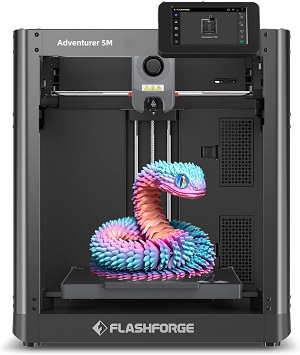
The FLASHFORGE Adventurer 5M 3D Printer is engineered for both speed and precision, making it an excellent choice for hobbyists and professionals alike. With a maximum printing speed of 600mm/s, it delivers rapid results without compromising quality. The fully automatic leveling feature simplifies setup and ensures consistent print quality across every project. Equipped with a powerful 280°C direct extruder and a 3-second detachable nozzle, this printer allows for easy maintenance and versatile filament options. The robust Core XY all-metal structure enhances stability during printing, while the generous print size of 220x220x220mm accommodates a variety of designs. Experience high-performance 3D printing with the reliability and innovation of the FLASHFORGE Adventurer 5M.
Best Features:
- High-Speed Printing: Up to 600mm/s, perfect for users who need fast results without sacrificing quality.
- Automatic Leveling: Fully automatic bed leveling ensures consistent print quality and easy setup.
- Powerful Direct Extruder: The 280°C extruder supports a wide range of filament types, enhancing material versatility.
- Quick Nozzle Replacement: Detachable nozzle can be swapped out in just 3 seconds, simplifying maintenance.
- Core XY All-Metal Structure: Provides better stability during printing, leading to higher precision.
- Generous Build Volume: 220x220x220mm allows for a wide range of project sizes.
TOP 2. Creality Ender 3 V3 SE 3D Printer
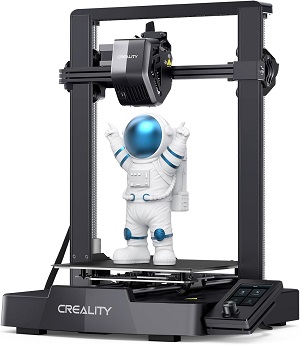
The Creality Ender 3 V3 SE 3D Printer is designed for enhanced performance and user-friendly operation. With a printing speed of up to 250mm/s, it enables faster and more efficient printing, making it ideal for both beginners and experienced users. The CR Touch auto-leveling feature ensures precise bed leveling, reducing setup time and improving print quality. Featuring a Sprite direct extruder, this printer provides better filament control, allowing for a wider range of material compatibility. The dual Z-axis enhances stability during printing, while the auto filament loading function simplifies the loading process. With a print size of 8.66 x 8.66 x 9.84 inches, the Ender 3 V3 SE offers ample space for various projects, making it a versatile addition to your 3D printing toolkit.
Best Features:
- Fast Printing Speed: 250mm/s for efficient project turnaround.
- CR Touch Auto-Leveling: Reduces setup time and improves print accuracy by automatically leveling the print bed.
- Sprite Direct Extruder: Provides better filament control and expands material compatibility for various projects.
- Dual Z-Axis: Adds stability and reduces vibrations during printing, improving overall print quality.
- Auto Filament Loading: Simplifies the filament loading process, making it more user-friendly.
- Build Volume: 8.66 x 8.66 x 9.84 inches offers ample space for both small and large projects.
TOP 3. ELEGOO Neptune 3 Pro FDM 3D Printer
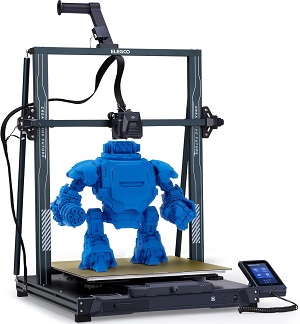
The ELEGOO Neptune 3 Pro FDM 3D Printer is a robust and versatile machine designed to meet the needs of both beginners and seasoned enthusiasts. Featuring auto bed leveling, it simplifies the setup process, ensuring a level printing surface for consistent results. The dual-gear direct extruder provides excellent filament control, allowing for precise extrusion and compatibility with various materials. The dual lead screw drive enhances stability and precision during printing, contributing to high-quality prints. With a large printing size of 8.85 x 8.85 x 11 inches, you can tackle a wide range of projects. The removable capacitive screen offers a user-friendly interface, making navigation and operation straightforward. Elevate your 3D printing experience with the ELEGOO Neptune 3 Pro.
Best Features:
- Auto Bed Leveling: Ensures a perfectly level surface, reducing the risk of printing issues.
- Dual-Gear Direct Extruder: Excellent filament control for precise extrusion and smooth prints.
- Dual Lead Screw Drive: Provides enhanced stability and precision during printing, resulting in high-quality outputs.
- Large Build Volume: 8.85 x 8.85 x 11 inches accommodates larger projects, ideal for a variety of designs.
- Removable Capacitive Screen: Easy-to-use touchscreen interface makes navigation and operation straightforward.
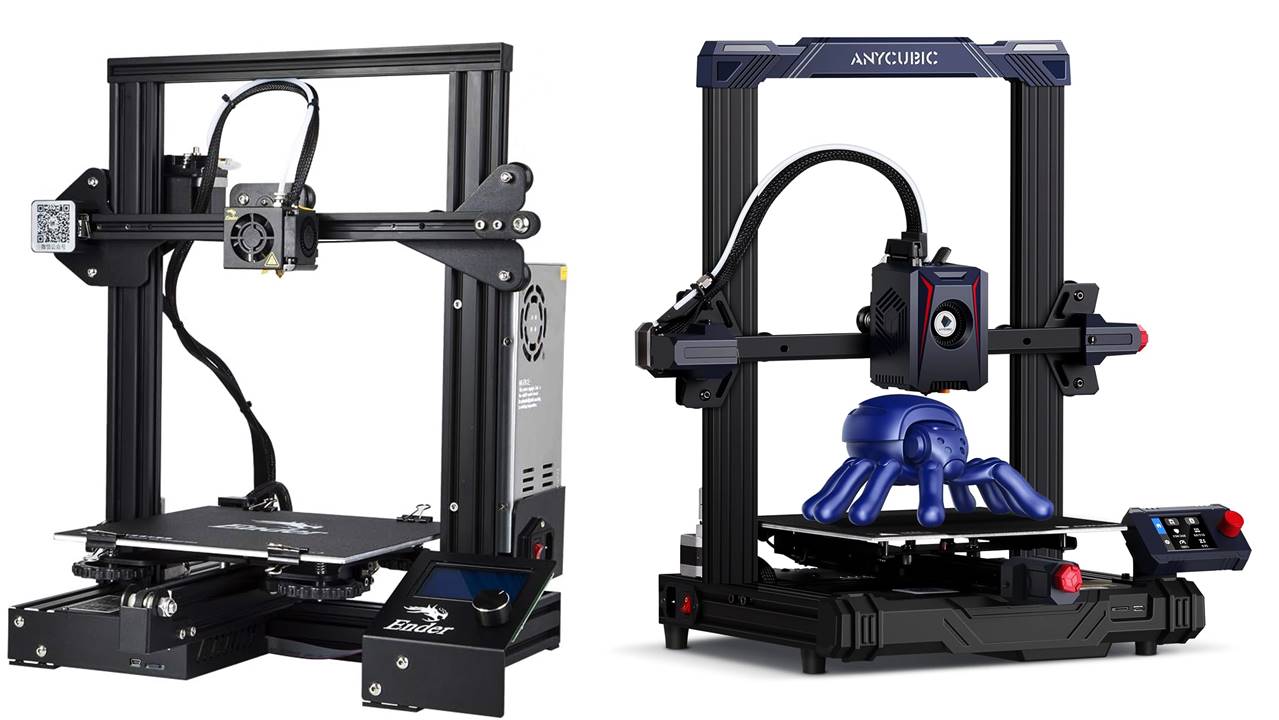
TOP 4. Official Creality Ender 3 3D Printer
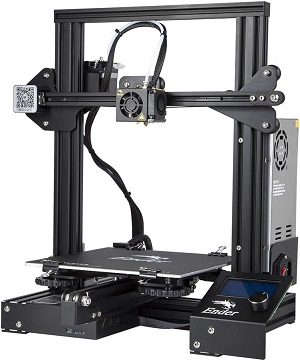
The official Creality Ender 3 3D Printer is a highly regarded, fully open-source machine that caters to both beginners and experienced users. Its robust design features a printing size of 8.66 x 8.66 x 9.84 inches, allowing for a variety of projects, from intricate models to functional prototypes. The printer includes a resume printing function, which automatically saves your progress in case of power outages or interruptions, ensuring that your projects are not wasted. The open-source nature of the Ender 3 allows for extensive customization and upgrades, making it a versatile choice for DIY enthusiasts. With its user-friendly assembly and reliable performance, the Creality Ender 3 is an excellent entry point into the world of 3D printing.
Best Features:
- Open-Source Design: Allows for extensive customization and upgrades, making it highly adaptable.
- Resume Printing Function: Automatically resumes prints after power interruptions, preventing project loss.
- User-Friendly Assembly: Easy to set up, even for beginners, with clear instructions and minimal hassle.
- Versatile Build Volume: 8.66 x 8.66 x 9.84 inches offers plenty of room for various project sizes.
- Affordable Entry Point: Provides high-quality prints at a budget-friendly price, making it an excellent choice for newcomers.
TOP 5. ANYCUBIC 3D Printer Kobra 2 Neo
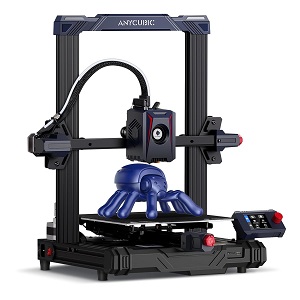
The ANYCUBIC Kobra 2 Neo 3D Printer is designed for high-speed printing and ease of use, making it ideal for beginners and enthusiasts alike. With a maximum print speed of 250mm/s, it significantly reduces printing time while maintaining quality. The auto-leveling feature simplifies the setup process, ensuring an even printing surface for accurate results. Its smart Z-offset adjustment further enhances print precision. The printer’s easy assembly allows beginners to get started quickly, while its upgraded design improves reliability and efficiency. Offering a generous print size of 8.7″ x 8.7″ x 9.84″, the Kobra 2 Neo is capable of handling a wide range of projects. This user-friendly and high-performance machine is a great addition to any 3D printing setup.
Best Features:
- Fast Printing Speed: Capable of printing at up to 250mm/s, significantly reducing overall printing time.
- Auto-Leveling: Simplifies setup and ensures an even print surface for optimal print accuracy.
- Smart Z-Offset Adjustment: Improves print precision by allowing fine-tuning of the Z-axis.
- Easy Assembly: Beginner-friendly, allowing users to start printing quickly with minimal setup.
- Generous Build Volume: 8.7″ x 8.7″ x 9.84″ enables users to take on larger projects.
- Upgraded Design: Improved reliability and efficiency for consistent printing performance.
Buying Guide For The Best 3D Printers
1. Types of 3D Printers
Understanding the different types of 3D printers is crucial in choosing the right one for your needs.
- FDM (Fused Deposition Modeling):
- How it works: Melts and extrudes thermoplastic filaments layer by layer.
- Best for: Beginners, hobbyists, and general-purpose use.
- Pros: Affordable, easy to use, compatible with a wide range of materials.
- Cons: Lower resolution, visible layer lines, may require post-processing.
- Popular models: Creality Ender 3, Prusa i3 MK3S+.
- SLA (Stereolithography):
- How it works: Uses a laser to cure liquid resin into solid objects.
- Best for: High-precision tasks, detailed models, and professionals.
- Pros: Excellent print quality and fine details.
- Cons: Resin can be expensive, requires post-processing (UV curing), and ventilation.
- Popular models: Anycubic Photon Mono X, Formlabs Form 3.
- SLS (Selective Laser Sintering):
- How it works: Fuses powdered material (like nylon) using a laser.
- Best for: Industrial-grade printing, functional prototypes, and complex designs.
- Pros: No need for support structures, very durable parts.
- Cons: Expensive, usually for industrial use.
- Popular models: Sinterit Lisa, Formlabs Fuse 1.
2. Key Factors to Consider When Buying a 3D Printer
a. Build Volume (Print Size)
- What it is: The maximum size an object can be when printed.
- Recommendation: Choose a printer with a build volume that meets your project needs. For hobbyists, a 200 x 200 x 200 mm print area is usually sufficient (e.g., Creality Ender 3). Larger projects require a bigger build volume.
b. Print Quality and Precision
- What it is: Measured by layer height (thickness of each layer) and XY resolution (precision on the X and Y axes).
- Recommendation: For basic models, a 0.1mm layer height is common. For detailed prints, look for printers with a 0.05mm layer height or less (SLA printers generally offer better resolution).
c. Material Compatibility
- What it is: The types of materials (filaments or resins) a printer can use.
- Common materials:
- PLA: Easy to use, great for beginners, not very strong.
- ABS: Strong and heat-resistant, but requires a heated bed and controlled environment.
- PETG: A balance between PLA and ABS, stronger and more flexible.
- Resin: Used for SLA printers, offers better detail but is more expensive.
- Nylon, Carbon Fiber, TPU: Advanced materials for specific use cases (flexible, durable, etc.).
d. Ease of Use
- What it is: User-friendly features like touchscreen controls, automatic bed leveling, WiFi connectivity, and easy software.
- Recommendation: Beginners should look for features like pre-assembled kits, intuitive interfaces, and helpful communities. Look for features like automatic bed leveling to reduce manual adjustments.
e. Print Speed
- What it is: The rate at which a 3D printer can print objects, usually measured in millimeters per second (mm/s).
- Recommendation: Most FDM printers print at 50–100 mm/s, but high-speed models can go faster. SLA printers are typically slower but more detailed. Consider if speed or detail is more important for your projects.
f. Heated Bed
- What it is: A heated bed helps improve the adhesion of prints to the build plate and reduces warping for certain materials (like ABS).
- Recommendation: Important if you plan to use ABS or PETG. Look for printers with heated beds if you need flexibility in material use.
g. Software Compatibility
- What it is: The software used to prepare 3D models for printing (slicing software).
- Recommendation: Look for printers compatible with widely-used software like Cura, PrusaSlicer, or proprietary software (Formlabs). Ensure it’s easy to use and supports the file types you work with (STL, OBJ, etc.).
i. Support and Community
- What it is: Having access to technical support or a community of users can be crucial for troubleshooting and learning.
- Recommendation: Well-established brands like Prusa, Creality, or Anycubic have large user communities and reliable customer support.
3D Printers – Frequently Asked Questions (FAQ)
- What is 3D printing?
3D printing is a process of creating a three-dimensional object by laying down successive layers of material, guided by a digital file. This additive manufacturing technique is used for producing prototypes, tools, and end-use products in a wide range of industries. - What materials can be used in 3D printing?
Common materials include:
Plastics: PLA, ABS, PETG, Nylon
Resins: Photopolymer resins for SLA printing
Metals: Titanium, aluminum, stainless steel (mainly in industrial settings)
Others: Ceramics, wood filaments, carbon fiber composites
- What are the main types of 3D printers?
FDM (Fused Deposition Modeling): The most popular for hobbyists; uses thermoplastic filament.
SLA (Stereolithography): Uses liquid resin and a laser to cure layers. Known for high detail.
SLS (Selective Laser Sintering): Uses powdered material, fused by a laser. Common in industrial use.
MSLA (Masked SLA): A faster and more precise variation of SLA using an LCD screen.
- What is the print resolution?
Print resolution refers to the layer height of each layer the printer deposits. Lower layer heights (e.g., 0.1mm) result in finer detail but take longer to print. Typical layer heights range from 0.05mm to 0.3mm. - How long does 3D printing take?
Print times depend on the object’s size and complexity. Small objects may take a couple of hours, while larger or more detailed prints can take 10+ hours. High-resolution prints also take longer.