TOP 1. Panasonic LUMIX S5 Full Frame Mirrorless Camera
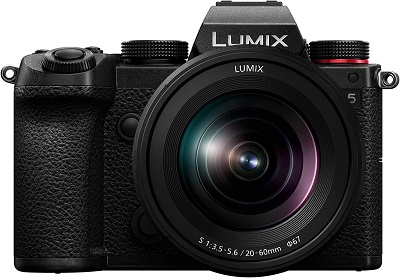
The Panasonic LUMIX S5 is a powerful full-frame mirrorless camera crafted for both photography and videography. With 4K 60P video recording capabilities and a flip-out screen, it’s perfect for vloggers and content creators. When paired with the LUMIX S 20-60mm F3.5-5.6 lens, you get a versatile focal range to tackle any shooting scenario. The camera’s 5-Axis Dual I.S. (Image Stabilization) ensures clear, steady shots, even in low light. The L-Mount system allows compatibility with a broad selection of lenses. Plus, built-in Wi-Fi makes sharing and remote control a breeze, making the LUMIX S5 an ideal choice for both professionals and enthusiasts seeking high-quality performance in a compact design.
Pros:
- 4K 60P Video: Excellent for videographers and vloggers.
- 5-Axis Dual I.S.: Steady shots even in low-light or handheld scenarios.
- Versatile 20-60mm Lens: Great focal range for various shooting situations.
- Compact and Lightweight: Ideal for travel and extended shooting.
- L-Mount System: Broad lens compatibility.
- Wi-Fi Connectivity: Easy sharing and remote control.
Cons:
- Battery Life: Some users report shorter battery life for video recording.
- No In-Built Flash: Requires external flash in low-light photography.
- Limited Third-Party Lens Support: The L-Mount system doesn’t have as wide a range of affordable third-party lenses as some other mounts.
TOP 2. Sony Alpha 7 IV Full-frame Mirrorless Interchangeable Lens Camera
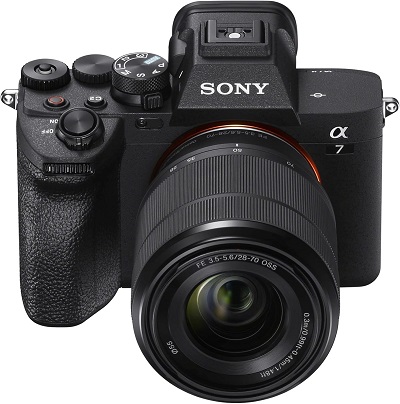
The Sony Alpha 7 IV is an innovative full-frame mirrorless camera that seamlessly combines advanced technology with ease of use. Included is a 28-70mm zoom lens kit, offering versatile focal lengths for everything from sweeping landscapes to intimate portraits. Its impressive 33-megapixel sensor produces stunning detail and vibrant colors, complemented by outstanding low-light performance. With 4K video capabilities and sophisticated autofocus features, including Real-Time Eye AF, this camera is perfect for both photography and videography. An intuitive touchscreen and customizable controls enhance your shooting experience, while built-in Wi-Fi ensures smooth sharing and remote functionality. The Alpha 7 IV is an exceptional tool for capturing your creative vision, whether you’re an enthusiast or a professional.
Pros:
- 33MP Sensor: Produces sharp images with vibrant colors and detail.
- Advanced Autofocus: Real-Time Eye AF is highly accurate for both stills and video.
- 4K Video: Ideal for professional-level videography.
- Intuitive Touchscreen: Customizable controls for enhanced user experience.
- 28-70mm Lens: Versatile focal range for various types of photography.
- Wi-Fi and Bluetooth: Seamless content sharing and remote control.
Cons:
- Price: Higher price point compared to entry-level full-frame cameras.
- Size and Weight: A bit bulkier compared to more compact mirrorless options.
- 4K Video Crop: Some video modes introduce a crop, limiting field of view.
TOP 3. Canon EOS RP Full-Frame Mirrorless Interchangeable Lens Camera
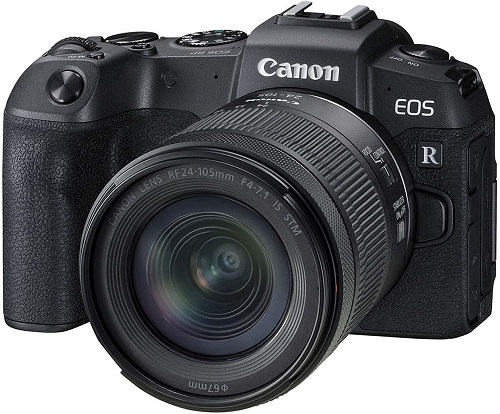
The Canon EOS RP is a lightweight and compact full-frame mirrorless camera, ideal for travelers and vloggers alike. It comes with the versatile RF 24-105mm F4-7.1 IS STM lens, providing a wide range of focal lengths for various shooting situations, from stunning landscapes to detailed close-ups. With a 26.2-megapixel sensor, the EOS RP delivers impressive image quality characterized by vibrant colors and great low-light performance. Its Dual Pixel autofocus system ensures quick and accurate focusing, while the vari-angle touchscreen makes it easy to frame shots from any perspective—perfect for vloggers. With built-in Wi-Fi and Bluetooth, sharing your content is effortless, making the EOS RP a reliable companion for creators on the go.
Pros:
- Lightweight and Compact: Perfect for travel and handheld shooting.
- Affordable Full-Frame: One of the most budget-friendly full-frame options.
- Dual Pixel AF: Quick and accurate autofocus for both stills and video.
- Vari-Angle Touchscreen: Great for vloggers and versatile shooting angles.
- Wi-Fi and Bluetooth: Simple file sharing and remote shooting.
Cons:
- Lower Resolution Sensor: 26.2MP sensor is slightly lower than other full-frame competitors.
- Limited 4K Video Features: 4K video has a 1.6x crop and lacks Dual Pixel AF in this mode.
- Plastic Build: Not as rugged or weather-sealed as higher-end models.
TOP 4. Sony a7 III (ILCEM3K/B) Full-frame Mirrorless Interchangeable-Lens Camera
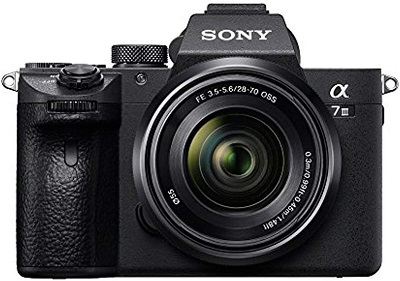
The Sony a7 III (ILCEM3K/B) is a full-frame mirrorless camera that shines in both photography and videography. Equipped with a 24.2-megapixel sensor, it provides exceptional image quality with remarkable detail and dynamic range. The included 28-70mm lens adds versatility, allowing for a range of shooting scenarios from landscapes to portraits. With a 3-inch LCD touchscreen and an advanced autofocus system featuring 693 phase-detection points, the a7 III guarantees fast and precise focusing even in challenging conditions. It also offers 4K video recording, making it an excellent choice for content creators. With robust battery life and a weather-sealed design, this camera is perfect for photographers seeking reliability and performance in a compact package. The Sony a7 III is an indispensable tool for enthusiasts and professionals aiming to capture breathtaking imagery.
Pros:
- 24.2MP Sensor: Exceptional image quality and dynamic range.
- 693 Phase-Detection AF Points: Fast and reliable autofocus in almost any condition.
- 4K Video Recording: Ideal for creators focusing on high-quality video.
- Versatile 28-70mm Lens: Covers a wide range of shooting scenarios.
- Long Battery Life: One of the best among mirrorless cameras.
- Weather-Sealed Design: Durable for outdoor shooting.
Cons:
- Outdated Screen Technology: The LCD screen resolution could be better.
- Menu System: Sony’s menu system can be complex and overwhelming for new users.
- No 10-bit Internal Video: Video quality not as detailed as some competitors.
TOP 5. Canon EOS R7 Mirrorless Camera
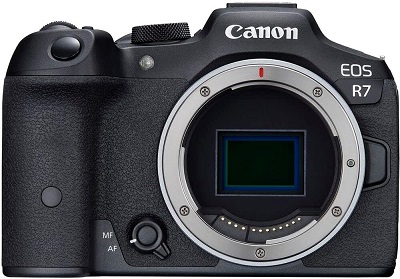
The Canon EOS R7 is a dynamic mirrorless camera tailored for sports, action photography, and content creation. Featuring a 32.5-megapixel APS-C CMOS sensor, it captures stunning detail and vibrant colors, ensuring your images make an impact. The camera supports 4K video recording, making it an excellent choice for vloggers and filmmakers in search of high-quality video content. With an advanced Dual Pixel autofocus system, the EOS R7 provides quick and accurate focusing, even in fast-paced scenarios. Its lightweight and compact design enhances portability, making it perfect for creators on the move. Built-in Wi-Fi and Bluetooth connectivity allow for easy sharing and remote control, establishing the Canon EOS R7 as a versatile hybrid camera for all your photography and videography needs.
Pros:
- 32.5MP APS-C Sensor: High-resolution images with excellent detail.
- 4K Video: Perfect for content creators who need high-quality video.
- Dual Pixel AF: Fast and precise autofocus, especially in action photography.
- Compact and Lightweight: Great for on-the-go creators.
- Wi-Fi and Bluetooth: Simple sharing and remote operation.
Cons:
- APS-C Sensor: Smaller than full-frame, limiting low-light performance compared to full-frame competitors.
- Lens Availability: Fewer RF-S lenses currently available compared to other systems.
- No Full-Frame Sensor: For professional photographers wanting full-frame quality, the R7 may feel limiting.
Full-Frame Camera FAQ
1. What is a full-frame camera? A full-frame camera features a sensor that is the same size as a 35mm film frame, measuring 36mm x 24mm. This is larger than the sensors found in crop-sensor or APS-C cameras, providing better image quality, low-light performance, and depth of field control.
2. What are the advantages of a full-frame camera?
- Improved image quality: Full-frame sensors capture more detail and produce higher-quality images, especially in low light.
- Better low-light performance: Larger sensors can gather more light, resulting in less noise and better performance in dim environments.
- Shallower depth of field: Full-frame cameras allow for a more pronounced background blur (bokeh), ideal for portrait photography.
- Wider field of view: Lenses mounted on full-frame cameras maintain their true focal length, providing a wider field of view compared to crop-sensor cameras.
3. What’s the difference between full-frame and crop-sensor cameras? The main difference is the sensor size. Full-frame cameras have larger sensors, offering better image quality and low-light performance. Crop-sensor (APS-C or micro four-thirds) cameras have smaller sensors, which apply a crop factor to the lens’s focal length (e.g., a 50mm lens behaves more like an 80mm lens on an APS-C camera).
4. Who should use a full-frame camera? Full-frame cameras are ideal for:
- Professional photographers who need high-quality images for prints or commercial work.
- Landscape photographers who require high resolution and dynamic range.
- Portrait photographers seeking better background blur and subject isolation.
- Low-light photographers who benefit from superior low-light performance. However, they are also used by enthusiasts who want the best image quality.
5. Are full-frame cameras heavier than crop-sensor cameras? Yes, full-frame cameras are generally larger and heavier because of the bigger sensor and the more robust construction. However, advancements in camera design have made some full-frame mirrorless models lighter and more portable than traditional DSLR models.
6. Are full-frame cameras more expensive? Full-frame cameras tend to be more expensive than crop-sensor cameras due to the larger sensor and the advanced features they offer. Lenses for full-frame cameras are also typically pricier.
![Read more about the article The 5 Best Android TV Box in Review 2024: [Full Update]](https://bestsmartshopping.com/wp-content/uploads/2024/10/Android-TV-Box-2-1-300x169.jpg "The 5 Best Android TV Box in Review 2024: [Full Update] 6")