Top 1: Garmin 010-00970-00 eTrex 10 Worldwide Handheld GPS
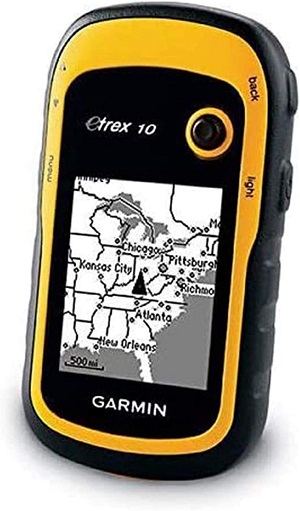
The Garmin eTrex 10 is a compact and rugged GPS device, perfect for outdoor enthusiasts. Equipped with a high-sensitivity GPS receiver and a large, easy-to-read display, it ensures reliable location tracking even in challenging environments such as dense forests or deep valleys. The eTrex 10 offers worldwide coverage, supporting waypoints, routes, and tracks, making it ideal for hiking, geocaching, and other outdoor activities. Its waterproof design can handle tough conditions, and with long battery life, it’s built to keep you on track during extended adventures. A dependable, no-frills navigation tool for all your outdoor excursions.
Pros:
- High-sensitivity GPS receiver ensures accurate location tracking even in dense forests or valleys.
- Durable, waterproof design withstands tough outdoor conditions.
- Long battery life for extended adventures.
- Simple, no-frills interface ideal for beginners.
- Worldwide coverage supports a variety of activities like hiking and geocaching.
Cons:
- Basic black-and-white display may be less appealing to some users.
- Limited internal storage for maps and data.
- No advanced features like Bluetooth or Wi-Fi connectivity.
Top 2: Optimus Wired GPS Tracker
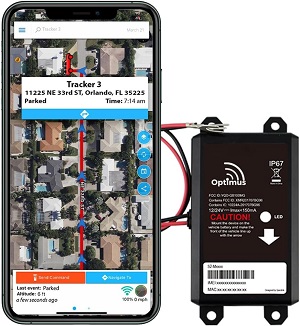
The Optimus Wired GPS Tracker is a budget-friendly and efficient solution for real-time vehicle tracking. Designed for easy installation, it connects directly to your vehicle’s battery, ensuring continuous power and operation. The tracker provides precise location data via an app, allowing you to monitor your vehicle’s location, speed, and route history from your smartphone or computer. With affordable subscription plans, this tracker offers an excellent way to boost your vehicle’s security and monitor its usage. Whether for theft protection or regular monitoring, the Optimus Wired GPS Tracker is a reliable and cost-effective choice.
Pros:
- Continuous power supply through a direct connection to the car’s battery.
- Real-time tracking with accurate location, speed, and route history.
- Affordable subscription plans.
- Easy-to-use app for monitoring via smartphone or computer.
- Ideal for vehicle security and tracking.
Cons:
- Designed specifically for vehicles, limiting outdoor or handheld use.
- Requires professional or DIY installation for setup.
- Not portable like traditional handheld GPS units.
Top 3: Bushnell BackTrack Mini GPS Navigation
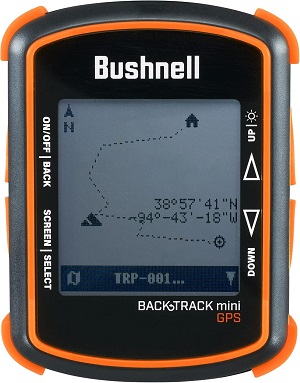
The Bushnell BackTrack Mini GPS is a compact and portable navigation device tailored for outdoor enthusiasts like hikers, hunters, and backpackers. This waterproof device offers simple, intuitive point-and-go navigation, enabling users to mark key locations such as campsites or parked vehicles and navigate back to them with ease. Small enough to fit in your pocket, the BackTrack Mini is durable and designed to withstand tough conditions. Its long battery life makes it a dependable companion for extended outdoor trips, providing straightforward GPS navigation for those who seek simplicity and reliability in the wilderness.
Pros:
- Ultra-compact, pocket-sized design for easy portability.
- Simple navigation system with point-and-go functionality.
- Waterproof and rugged for harsh outdoor conditions.
- Long battery life supports extended trips.
- Ideal for marking key locations like campsites or trailheads.
Cons:
- Lacks advanced features like detailed mapping or route planning.
- Limited to marking and navigating a small number of waypoints.
- Not suitable for detailed exploration or surveying tasks.
Top 4: BEVA GPS Land Measuring Instrument
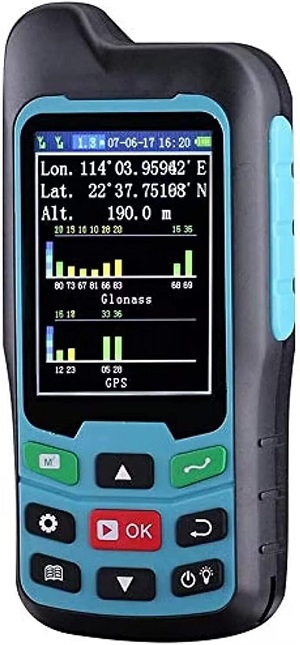
The BEVA GPS Land Measuring Instrument is a compact handheld GPS device designed for accurate land surveying in diverse terrains, including mountains, slopes, and flat fields. Ideal for professionals in land measurement, agriculture, and construction, this device ensures precise tracking for land boundaries, area calculations, and distance measurements. With its robust construction, the BEVA GPS performs reliably in both rugged and flat environments. Portable and user-friendly, it’s an essential tool for those needing efficient land measurement on the go.
Pros:
- Accurate location tracking for land surveying in various terrains.
- Compact and portable design for easy carrying.
- User-friendly interface simplifies land measurement tasks.
- Reliable performance in tough environmental conditions.
- Ideal for professionals in agriculture, construction, and surveying.
Cons:
- Specialized for land measurement, limiting general navigation use.
- Lacks advanced outdoor features like detailed topographic maps or waypoints.
- Limited appeal for recreational users.
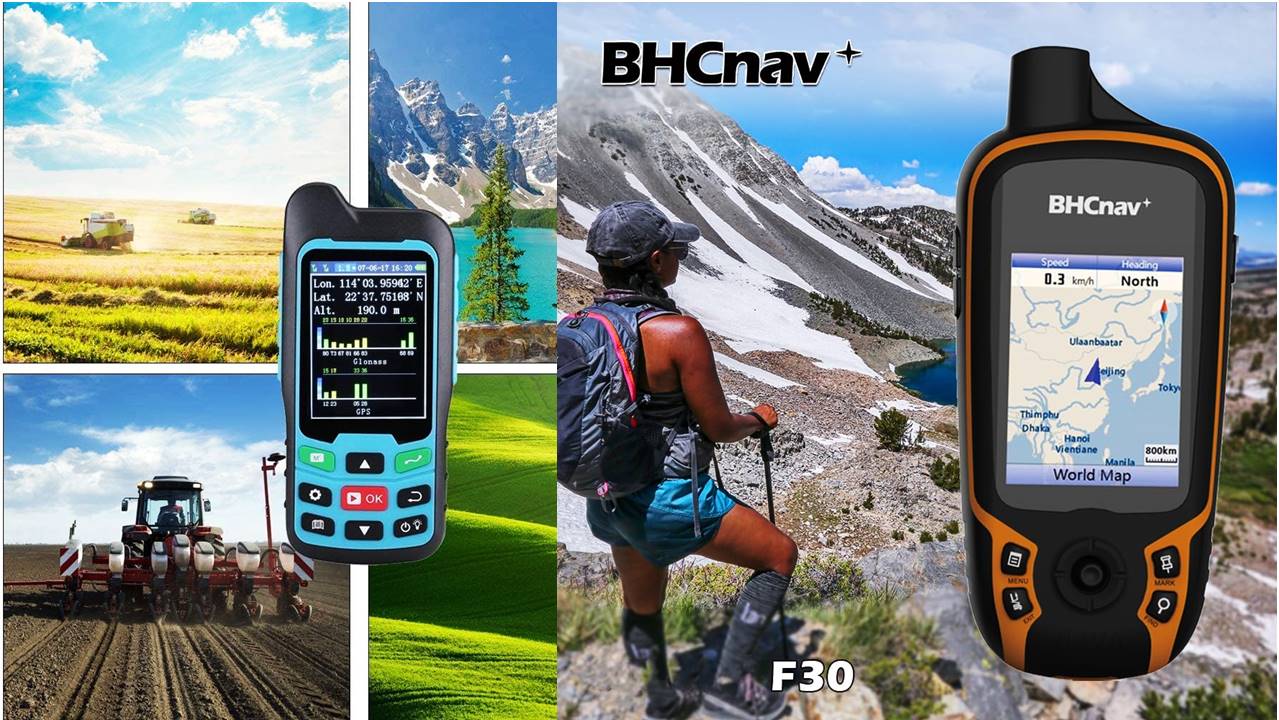
Top 5: NAVA F30 Handheld GPS Unit
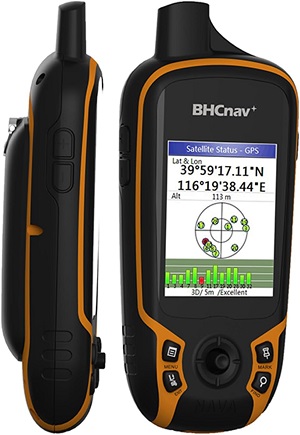
The NAVA F30 Handheld GPS Unit is a versatile and user-friendly device designed for outdoor activities such as hiking, hunting, and traveling. Featuring a bright, colorful map display, it offers clear and detailed navigation for all your adventures. With high accuracy for land surveying, it’s ideal for precise location tracking and route planning. The F30’s durable construction ensures it can withstand harsh outdoor conditions, while its intuitive interface makes it easy to use in the field. Whether you’re exploring new terrain or planning your next adventure, the NAVA F30 is a reliable companion for outdoor navigation.
Pros:
- Colorful map display enhances visibility and user experience.
- High accuracy for land surveying and outdoor navigation.
- Rugged construction ensures durability in challenging conditions.
- Versatile features for hiking, hunting, and adventure activities.
- Intuitive interface makes it easy to operate.
Cons:
- Heavier and bulkier compared to simpler GPS devices.
- Battery life may be shorter due to the color display.
- Premium price for features that some users might not need.
FAQs about Handheld GPS Devices
1. What is a handheld GPS device used for?
A handheld GPS device is a portable navigation tool designed for outdoor activities such as hiking, camping, geocaching, and off-road adventures. It provides accurate location tracking, route planning, and navigation even in remote areas without cell service.
2. What features should I look for in a handheld GPS device?
Key features to consider include:
- Durability: Water resistance and rugged construction.
- Battery Life: Long-lasting battery or support for replaceable AA/AAA batteries.
- Mapping Options: Preloaded maps, compatibility with topographic maps, and ability to upload custom maps.
- Satellite Support: Access to GPS, GLONASS, and Galileo for better accuracy.
- Screen Type: Easy-to-read display, preferably sunlight-readable.
- Additional Tools: Compass, altimeter, and barometer for enhanced navigation.
3. Do handheld GPS devices work without an internet connection?
Yes, handheld GPS devices do not require an internet connection to function. They rely on satellites to provide location data and navigation, making them reliable in remote areas where cellular signals are unavailable.
4. How accurate are handheld GPS devices?
Most modern handheld GPS devices offer accuracy within 3-5 meters under ideal conditions. Devices with multi-GNSS support (e.g., GPS, GLONASS, Galileo) and WAAS/EGNOS capabilities further improve accuracy.
5. What is the difference between a handheld GPS device and a smartphone GPS?
While smartphones rely on GPS signals, they also depend on cellular data for enhanced accuracy and mapping. Handheld GPS devices, on the other hand, are purpose-built for rugged outdoor use, offering superior battery life, offline mapping, and better performance in challenging environments like dense forests or canyons.